Two quotes come back for what looks like the same box, and the numbers are nowhere near each other. The instinct is to assume one supplier is overcharging.
Packaging is not an off-the-shelf product. Change the quantity, the size, the material, the finishing, or the delivery date, and the way the job is produced — and the cost structure behind it — changes with it.
This article covers the five variables that move a packaging quote the most. No printing jargon — just what actually drives the number.
1. Quantity: it is not simply "more is cheaper"
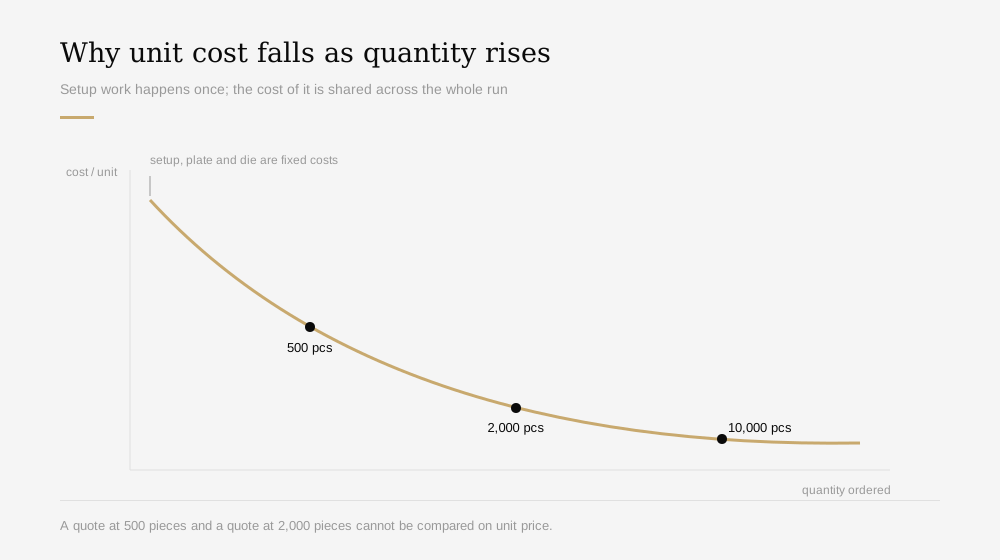
Before production starts, there are setup costs: machine setup, die-cutting preparation, and depending on the job, plate-making. Those costs do not disappear just because you are ordering a few hundred boxes instead of a few thousand.
Spread across a small run, each box carries a larger share of them. Increase the quantity and the per-unit cost usually falls.
Which is why the first thing to check before comparing two quotes is not the total — it is whether both are priced at the same quantity tier. A quote at 500 pieces and a quote at 2,000 pieces are not comparable on unit price.
2. Size and structure: a small change can alter the whole layout
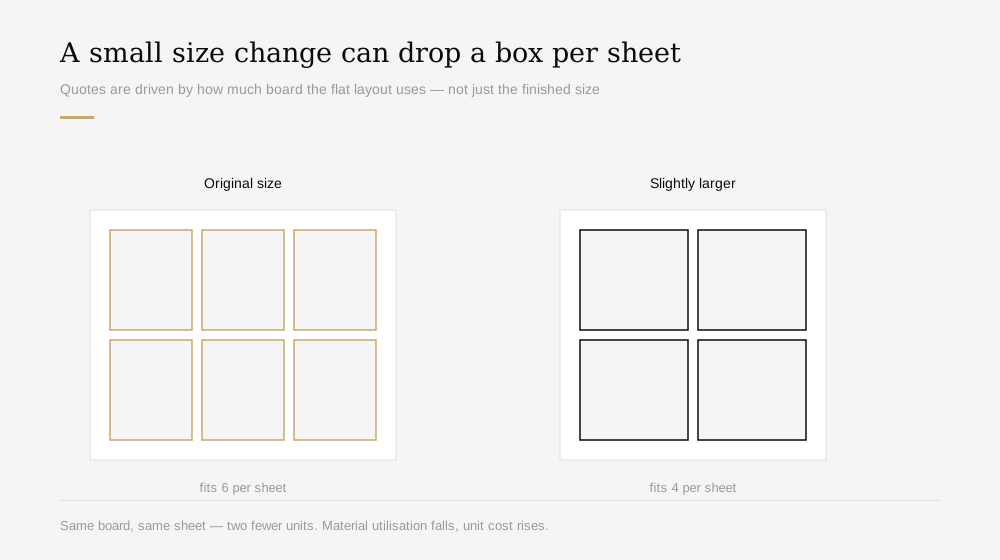
A packaging quote is based on more than the finished length, width and height. It is based on how much board the box uses when it is laid out flat.
Adjust the size slightly and you can change how many boxes fit on a sheet of board. A layout that fitted perfectly may drop one box per sheet once the dimensions grow — and material utilisation falls with it.
Structure matters just as much. A standard folding carton and a complex custom shape have very different requirements for die-cutting, gluing and hand assembly.
If your product dimensions are already fixed, there is little to gain from enlarging the box to make it look bigger. A box that fits properly wastes less material and takes up less space in transit.
3. Material: match the use case, not the thickness
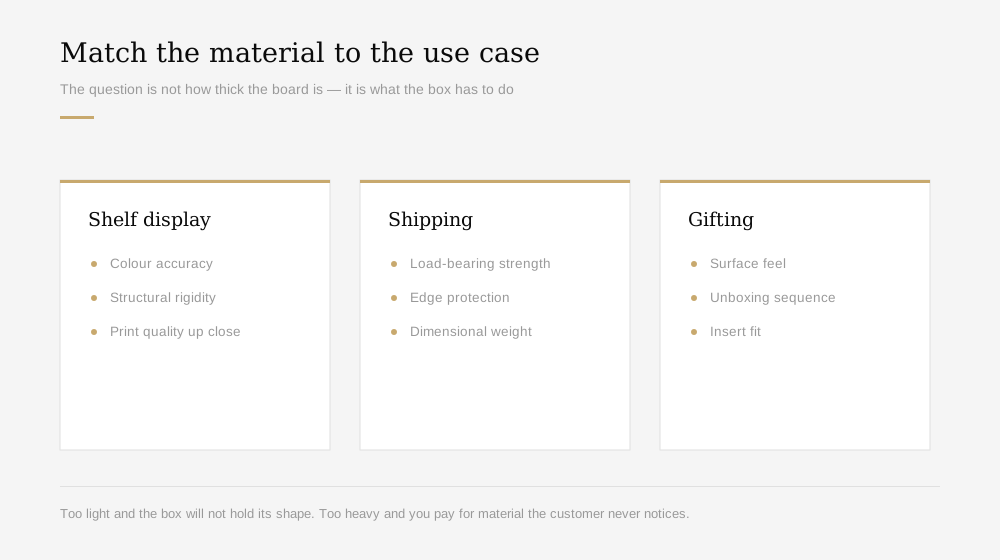
Food, cosmetics, jewellery, electronics and shipping packaging all ask different things of paper: stiffness, feel, load-bearing capacity and shelf presence.
Too light, and the box will not hold its shape. Too heavy, and you are paying for material the customer never notices.
Three questions narrow it down quickly:
- How heavy is the product, and does it need additional protection?
- Is the box for shelf display, shipping, or gifting?
- What matters more — natural paper feel, colour accuracy, or surface texture?
Meeting the protection and functional requirement first, then upgrading feel and appearance, is usually more sensible than starting from "thickest and most expensive".
4. Printing and finishing: every addition should have a purpose
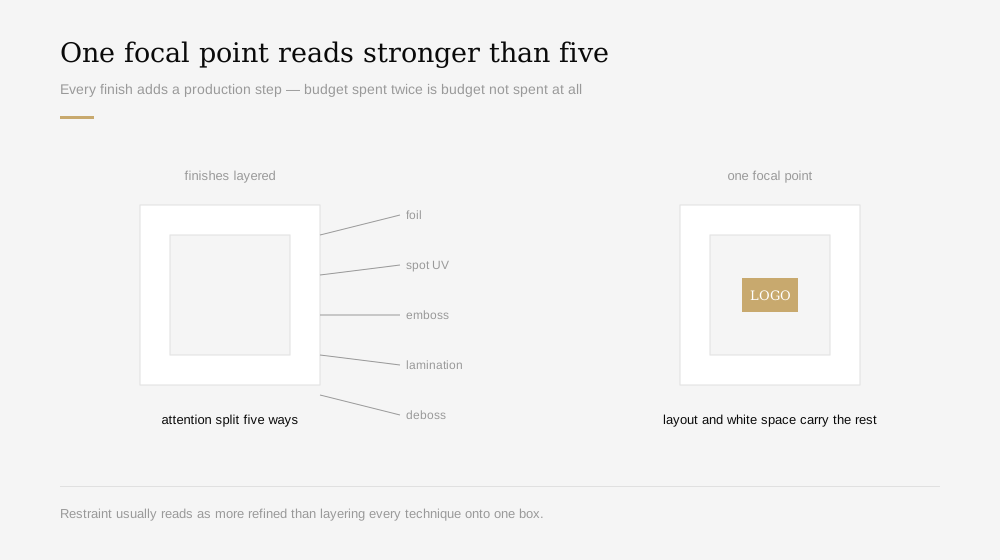
Print colours, lamination, foil stamping, spot UV, embossing — each one adds material and production steps. Some also require additional plates, registration and handling.
More finishing is not automatically more premium. A box that applies several heavy techniques at once can end up with no visual focus at all, because everything is competing.
On a tight budget, put the money in one place that carries the brand: the logo, the product name, or a key graphic. Let layout, white space and colour do the rest. Restraint usually reads as more refined than layering.
5. Delivery requirements: time and logistics are part of the price
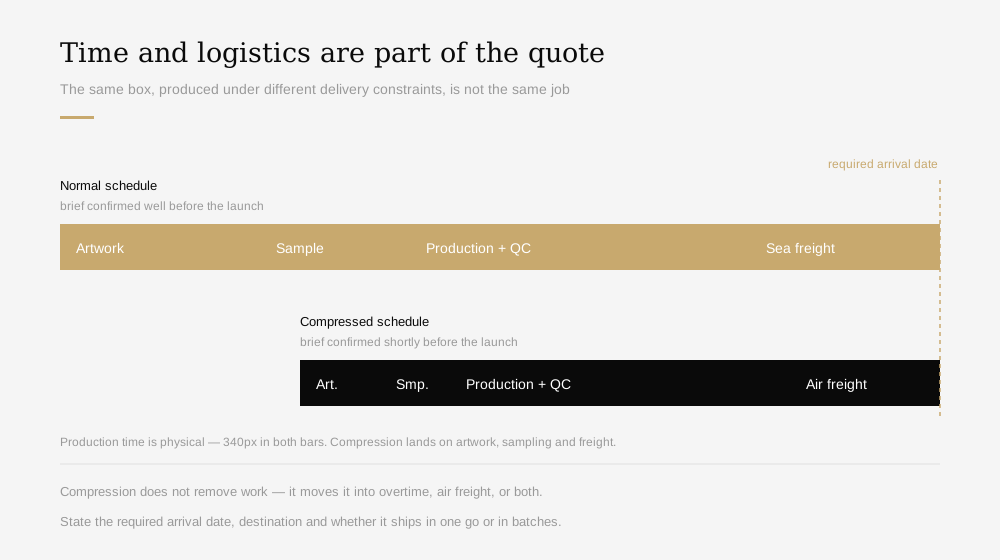
Production lead time and delivery method are easy to overlook at the enquiry stage. Rush production, split shipments, multiple delivery addresses and remote destinations all affect the final cost.
Starting packaging shortly before a launch or an event also compresses the time available for approval, production and shipping — and compressed timelines carry their own cost.
When you request a quote, state three things up front: when you need it to arrive, where it is going, and whether it ships in one go or in batches. The more complete the brief, the closer the first quote is to the final landed cost.
How to tell whether two quotes are actually comparable
Before comparing numbers, confirm that these seven items match:
- Box style / structure
- Finished dimensions
- Quantity
- Material and board grade
- Print method and number of colours
- Surface and spot finishing
- Delivery destination and required date
If any one of them differs, the two quotes may not be for the same product at all.
If the budget is tight, adjust in this order
- Confirm the size first. Where the product fits and is protected, avoid unnecessary enlargement.
- Ask for more than one quantity tier. A single quantity gives you a single number; tiered pricing shows where the balance point sits.
- Keep one signature finish. Concentrate the visual budget on the piece of information that matters most.
- Allow normal production time. Rush charges and multiple split deliveries are avoidable costs.
The quote is the sum of the choices, not a standalone number
A packaging quote is not an isolated figure — it is the result of a set of decisions made together. Describe your requirement clearly, then compare prices, and you will find the option that genuinely fits your project.