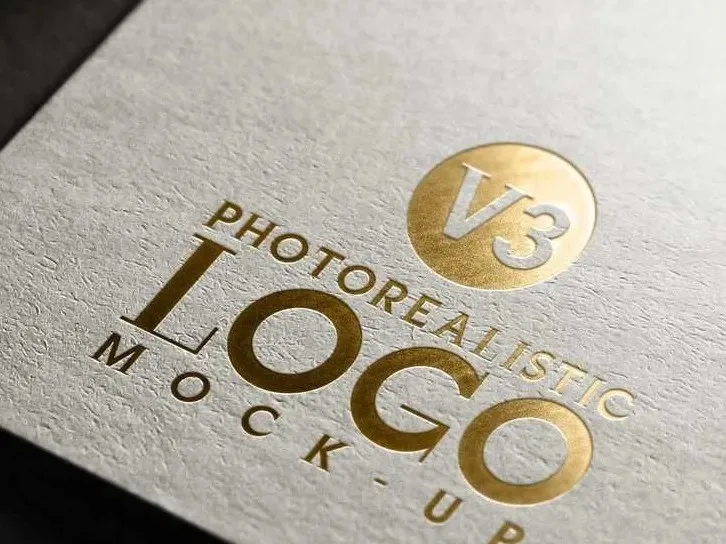
Fifteen years in packaging. And in those fifteen years, I've heard the same question more times than I can count:
"Why is the foil stamping from that other supplier half the price of yours?"
Every time I hear it, I want to hand the buyer a piece of sandpaper. Or better yet, teach them a simpler test — one that takes three seconds and tells you everything you need to know about whether a supplier's hot foil stamping is worth the money.
Take your fingernail. Press it firmly against the edge of the foil-stamped area and drag it across. If gold flakes off like dandruff, or if the edge looks like it was chewed by a dog — walk away. That supplier just saved you from a very expensive mistake.
Hot foil stamping (also called gold foil printing, foil blocking, or hot stamping) is the process of applying a metallic or pigmented foil to packaging under heat and pressure. Done correctly, it's the most powerful finishing technique in luxury packaging — a sharp, reflective logo that catches light from across a room. Done poorly, it's a liability that damages your brand the moment a customer's finger grazes it.
The 3 Quality Failures of Cheap Foil Stamping
Price differences in hot foil stamping rarely come from the machine. They come from the material, the settings, and the people running it. Here are the three most common ways low-cost suppliers cut corners — and how to spot each one.
Substandard Hot Stamping Foil
The metallic material used in foil stamping is called hot stamping foil (or electrochemical aluminium foil). It is not gold — it's a polyester film coated with a metallic layer. Premium foil from manufacturers like Germany's KURZ has a dense, tightly bonded metallic layer with strong adhesion. Inferior foil, often made from recycled materials, has a loose metallic layer that separates easily under friction — or even under normal handling. You can spot the difference by running your thumb across the foil surface. Premium foil stays completely intact. Cheap foil smears.

Precision hot foil stamping on dark green specialty paper — the fine bamboo leaves and cloud borders require exact temperature and pressure control. Any deviation produces blur or foil loss at the tips.
Uncontrolled Temperature and Pressure
Hot foil stamping operates within a narrow window of heat and pressure. Too hot, and the foil burns or discolours — producing a dull, patchy finish instead of the clean metallic sheen buyers pay for. Too cool, and adhesion fails — the foil doesn't bond and peels within days. Uneven pressure causes the most common defect in low-quality foil stamping: "edge blowout" (爆边) — where the foil bleeds outside the design boundary, creating a fuzzy or ragged edge where there should be a razor-sharp line. Many small-scale suppliers don't calibrate their machines between jobs, or lack the experienced operators to do it correctly. The result is visible in every batch they produce.
Worn or Low-Quality Stamping Dies
Hot foil stamping uses either a brass die or a zinc die, machined to the exact shape of your design. A quality die has crisp, clean engraved edges that translate directly into crisp foil boundaries on your packaging. Cheap suppliers reuse worn dies, or cut costs with zinc dies that degrade faster. A worn die produces uneven pressure across the design — some areas stamp cleanly, others don't stamp at all. You'll see missing areas in the foil, inconsistent brightness, or foil that only partially adheres.
What Premium Hot Foil Stamping Actually Looks Like
If you're evaluating a custom foil stamping manufacturer — whether for luxury gift boxes, cosmetic packaging, PR boxes, or folding cartons — here's what you should demand before approving any production run:
- Razor-sharp edges: The boundary between foil and substrate should look cut by a laser, not a brush. Under a loupe, there should be no feathering, bleeding, or irregularity.
- Fingernail-resistant adhesion: Press hard and drag across the foil edge. Nothing should lift, flake, or smear.
- Consistent brightness across the full print run: Pull three sheets from the beginning, middle, and end of a job. The metallic brightness should be identical. Variation indicates temperature drift — a sign the machine isn't being monitored.
- Uniform appearance in different lighting: Move the sample under direct light, then indirect light, then at an angle. Premium foil maintains its sheen and shows no patchiness in any condition.
- No "foil bridging" on fine details: For intricate designs like thin lines, small text, or detailed patterns (as in the bamboo image above), the foil should follow every contour exactly. Bridging — where foil spans across fine gaps — is a sign of excessive pressure or die quality issues.
Why the Price Gap Exists — And What It's Really Buying You
Quality hot foil stamping on packaging costs more for three legitimate reasons:
Better foil material. Premium imported stamping foil costs significantly more than domestic alternatives. The metallic layer is denser, the adhesive coating bonds more reliably, and the colour accuracy — especially for gold tones — is far more consistent across batches.
Experienced operators. Hot stamping is not an automated process. The setup — temperature, pressure, dwell time, die registration — requires an experienced eye. At our factory in Shenzhen, we have operators with 20+ years on hot stamping presses. Their calibration decisions on each job are what separates a clean result from a reject.
Die investment and maintenance. Brass dies are more expensive than zinc, but they hold their edge through far more impressions. And they're maintained — cleaned, inspected, and replaced when wear becomes visible, not when a client complains.
Those three inputs cost money. The suppliers charging half our price are cutting corners on at least one of them — usually all three.
Why This Matters for Your Brand
Consider the scenario: your customer receives a luxury gift box. They pick it up, excited. Their finger grazes the foil-stamped logo — and gold flakes transfer to their fingertip.
In that moment, you haven't just lost the perceived value of the packaging. You've created a specific, physical memory of your brand failing a basic quality standard. That association doesn't disappear when they throw the box away.
Premium hot foil stamping is not a cosmetic upgrade. It's the signal your brand sends at the exact moment a customer physically touches your product for the first time. It should be the last place you allow a supplier to cut corners in your custom packaging.
Quick Reference: Quality Foil Stamping Checklist
- Run your fingernail firmly across the foil edge — zero flaking or lifting
- Inspect edges under magnification — clean, not ragged or feathered
- Check fine details (thin lines, small text) — foil follows exactly, no bridging
- Compare 3 samples from across the print run — brightness identical
- Rotate under direct light — uniform sheen, no patchy or dull areas
- Ask your supplier: what foil brand? What die material? Who sets the machine?
What to Ask Your Supplier Before You Approve Samples
Most buyers never ask these questions. The ones who do rarely end up with bad foil:
- "What foil brand do you use — domestic or imported?" A supplier who uses premium foil will tell you immediately and with confidence.
- "Can I see samples on my specific substrate?" Foil adhesion behaves differently on coated art paper, uncoated stock, soft-touch lamination, and specialty papers. Always test on the actual substrate your job will use.
- "What's your reject rate on foil jobs?" A good factory tracks this. If they can't answer, that's an answer.
- "Who sets up the press?" Ask about the operator's experience. Setup is where most quality failures begin.
At JD Packaging, we've run hot foil stamping jobs for over fifteen years — on luxury rigid boxes, folding cartons, paper bags, and specialty packaging for clients in Europe, North America, and the Middle East. We use imported stamping foil, brass dies, and operators who have been setting up these presses for decades.
If you're evaluating suppliers, request our samples. Run the fingernail test. Then ask the other quotes to do the same.
Good craftsmanship survives the test. Good suppliers welcome it.